What Is Viscose Fiber? —
Rayon Explained: Types, Properties & How It Pairs with Polyester
You've seen the word everywhere — viscose, sometimes called rayon or artificial silk. It's on T-shirt labels, in fashion-fabric specifications, and combined with polyester in our PV blended yarn. But what exactly is viscose? Is it natural or synthetic? Why is it called "the breathing fabric"? And how does it compare to cotton and polyester? 🌳
This guide explains viscose fiber from the basics to advanced — what it is, how it's made, the three main types, its unique properties, and which fabric applications it's best for. Whether you're sourcing 100% viscose, PV blended yarn, or just trying to understand the fibre, this is your complete reference. ✅
🌳 What Is Viscose Fiber?
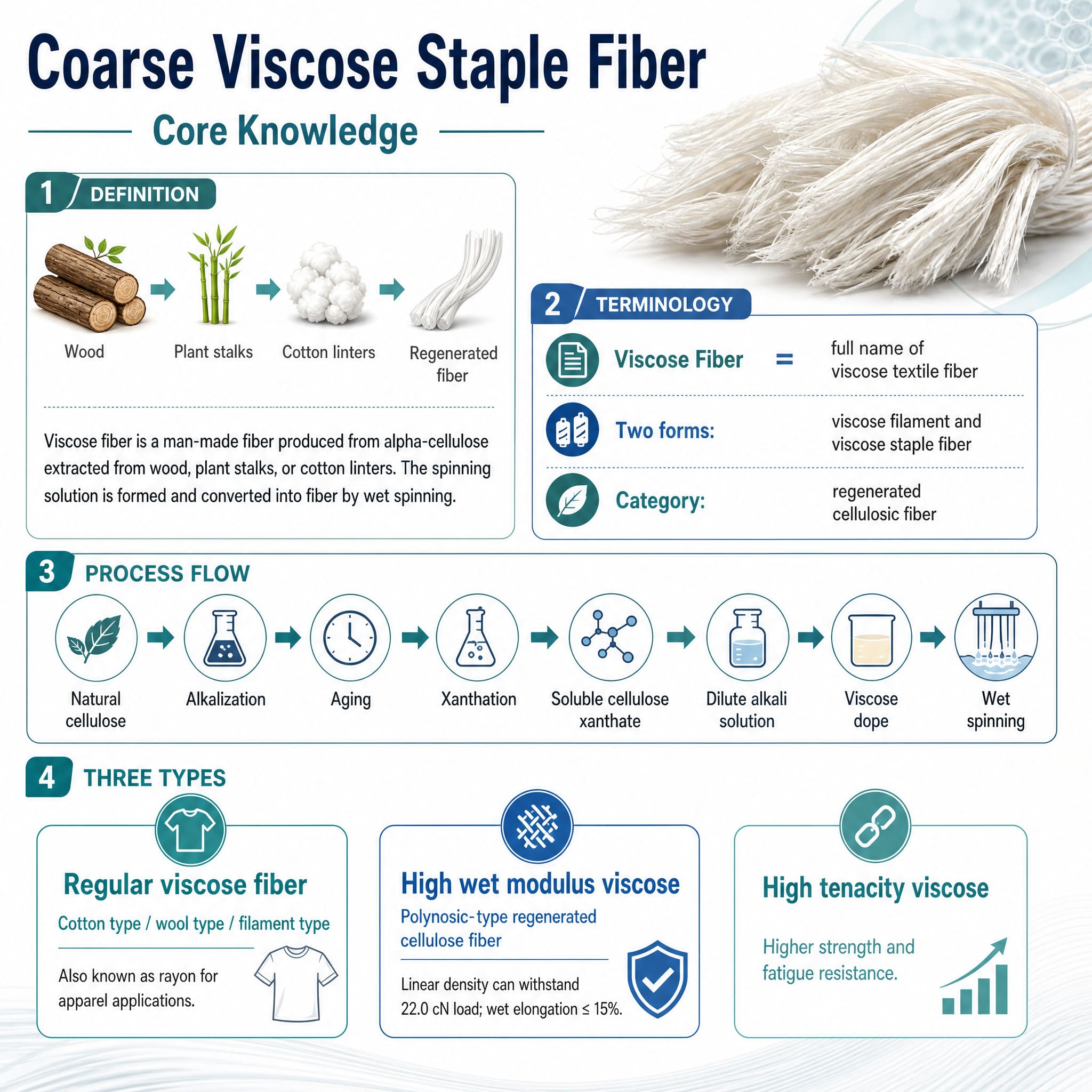
Viscose (also called rayon in North America, artificial silk historically, or 粘胶纤维 in Chinese) is a regenerated cellulose fibre — a man-made fibre derived from natural raw materials. It is technically neither fully natural (like cotton) nor fully synthetic (like polyester), but sits in a third category called semi-synthetic or regenerated fibres. 🧪
The raw material is α-cellulose — pure cellulose extracted from natural sources: wood (typically beech, pine, eucalyptus or bamboo), plant stalks, or cotton linters (short cotton fibres). This cellulose is chemically dissolved, then re-formed into long continuous filaments through a wet-spinning process. The output is a textile fibre that looks and behaves like silk but is produced at a fraction of the cost. ✨
- Natural fibres — exist in nature in fibre form: cotton, wool, silk, linen
- Regenerated fibres (viscose's category) — natural raw materials dissolved and re-formed into fibres: viscose, modal, lyocell
- Synthetic fibres — produced entirely from petrochemicals: polyester, nylon, acrylic
🏭 How Viscose Is Made — The Production Process
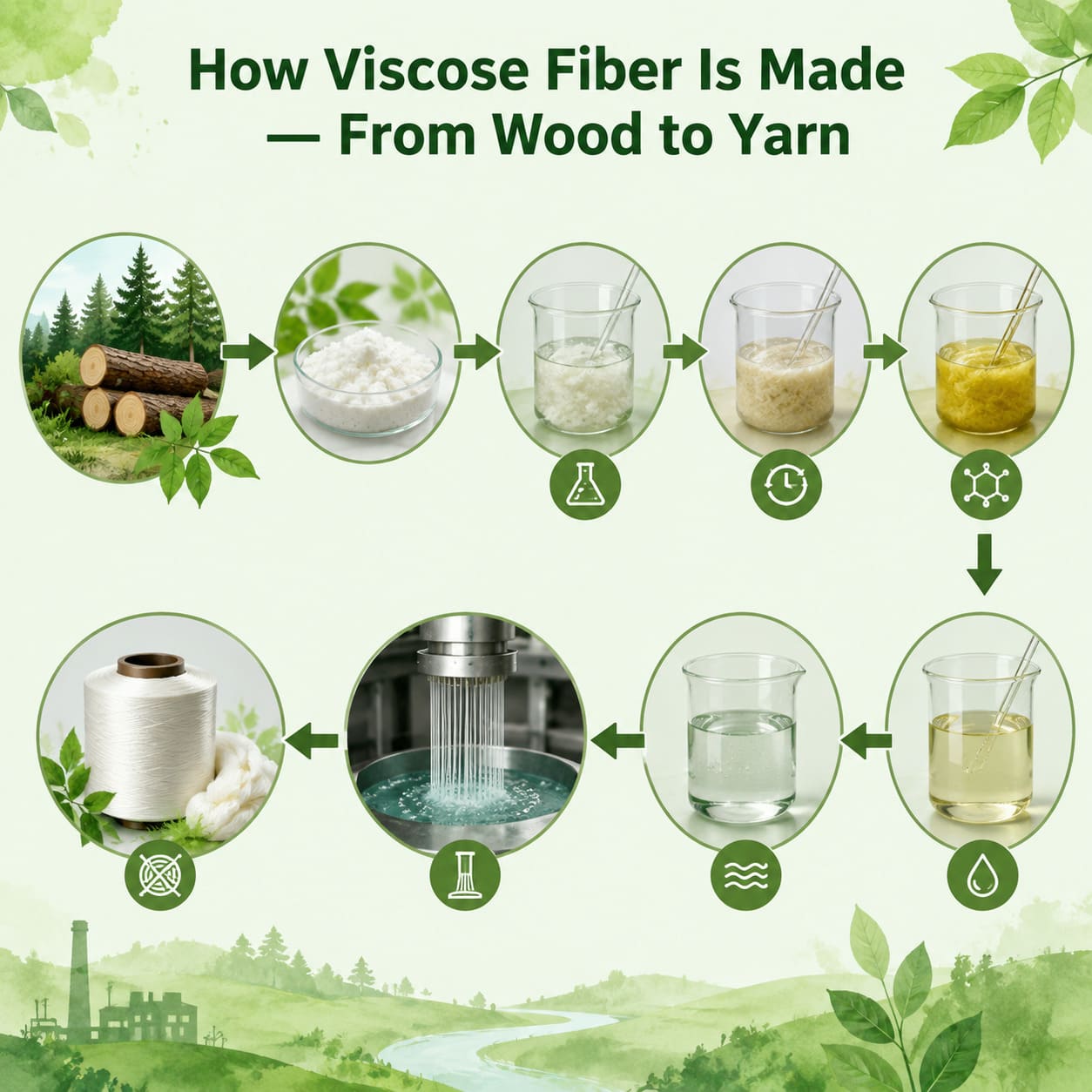
The viscose production process is a fascinating chemistry sequence that converts solid wood into a liquid solution, then back into a continuous fibre. Here's the step-by-step: 🔬
🎨 Three Types of Viscose Fibre
Depending on the raw material grade and spinning process, viscose can be produced in three distinct grades with different performance characteristics: 📋
✨ Why Viscose Is Called "The Breathing Fabric"
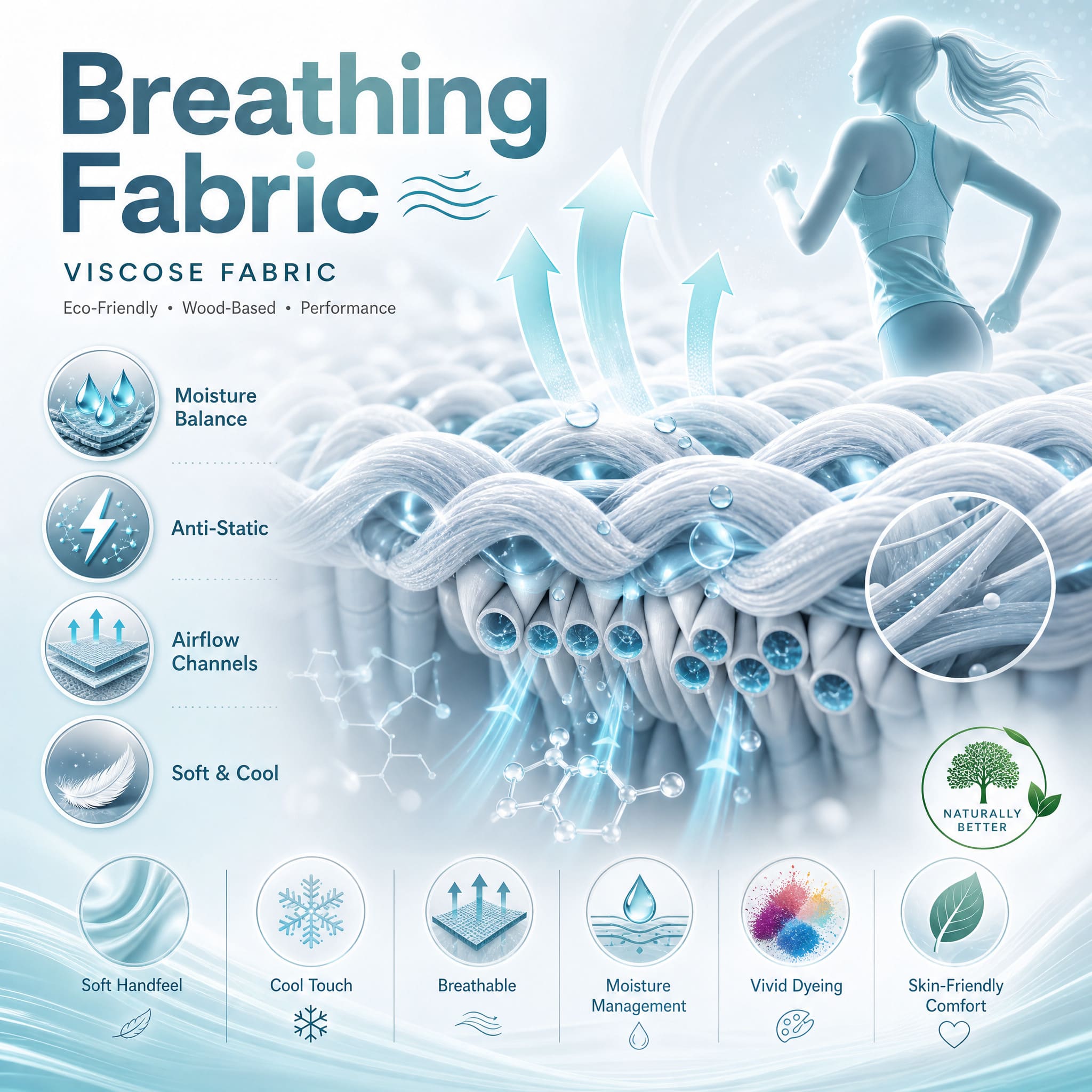
Viscose fibre has a unique nano-spiral molecular structure that creates microscopic channels through the fibre — like tiny tubes that allow air and moisture to flow through. This structural feature is the key to its most-marketed property: outstanding breathability and moisture management. 🌬️
🌟 The Six Key Properties of Viscose
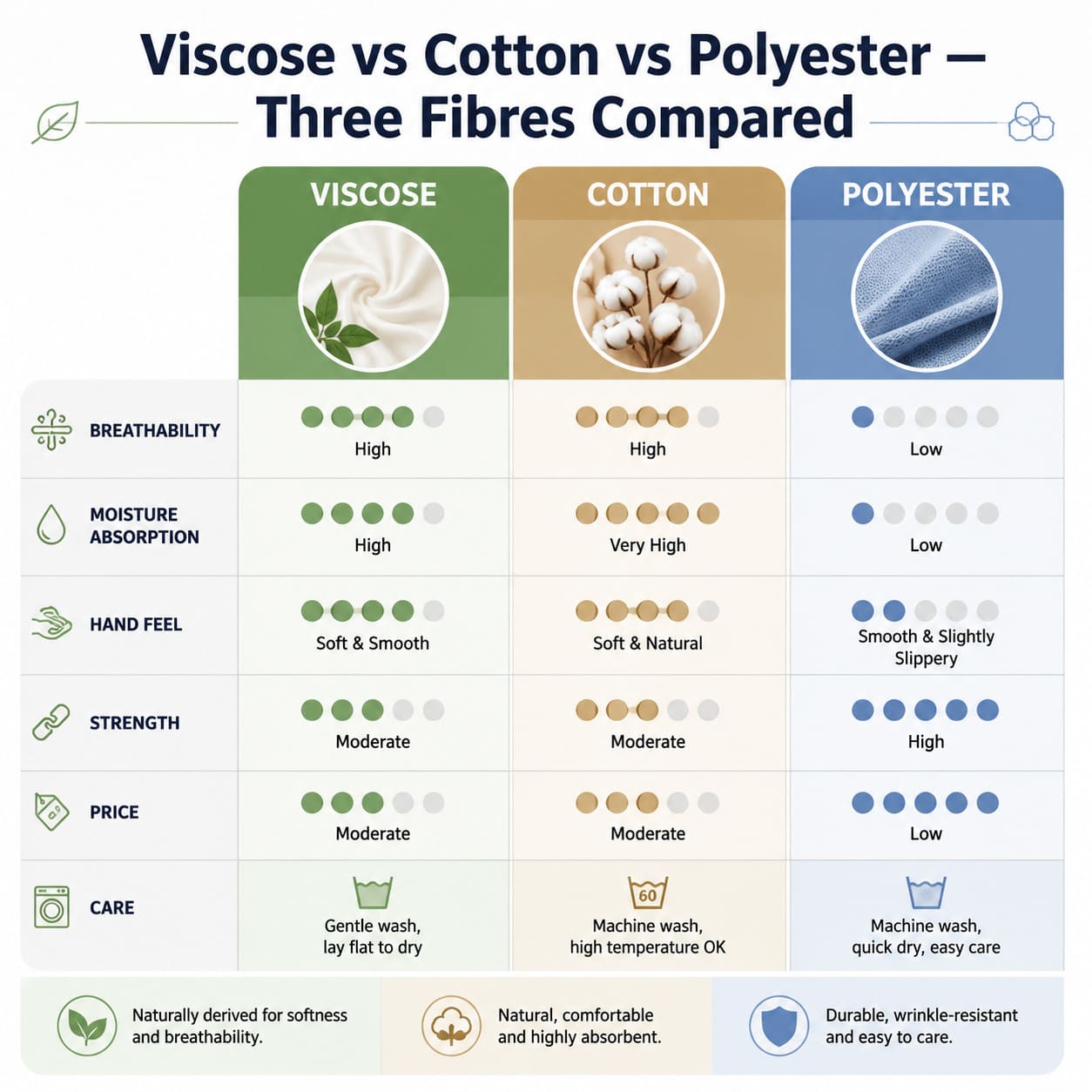
📊 Viscose vs Cotton vs Polyester — Complete Comparison
| Property | 🌿 Viscose | 🌾 Cotton | 🧪 Polyester |
|---|---|---|---|
| Origin | Regenerated (wood pulp) | Natural (cotton plant) | Synthetic (petrochemical) |
| Moisture regain | 11–13% (highest) | 7–8% | 0.4% |
| Breathability | Excellent — best of three | Excellent | Moderate |
| Hand feel | Silk-like, smooth, cool | Soft, natural, warm | Varies by F count |
| Dry strength | Moderate | Good | Excellent |
| Wet strength | Reduces ~50% wet | Increases when wet | Unchanged when wet |
| Wrinkle resistance | Poor — wrinkles easily | Moderate | Excellent |
| Shrinkage | 2–4% (can be controlled) | 3–5% | <1% |
| Dye absorption | Excellent — vivid colours | Good | Moderate (needs heat & pressure) |
| Antistatic | Excellent | Good | Poor — needs treatment |
| Durability | Moderate | Good | Excellent |
| Care | Hand wash recommended | Machine washable | Easy care, fast dry |
| Price (rel. to cotton) | ~80–90% | 100% (baseline) | ~50–70% |
| Best for | Drape fabric, blouses, summer wear | Daily wear, underwear, towels | Sportswear, durable wear |
🤝 Why Polyester & Viscose Are Blended Together
Each fibre has clear strengths and weaknesses. Polyester is strong, wrinkle-resistant and cheap — but doesn't breathe well and feels synthetic. Viscose is breathable, drapes beautifully and feels silky — but wrinkles easily, loses strength when wet, and costs more. Combining them in PV blended yarn delivers the best of both fibres. 🔗
The standard PV yarn blend is 65% polyester / 35% viscose. This ratio gives polyester's structural and durability benefits while incorporating enough viscose to add softness, breathability and drape. Other common ratios include 50/50 (more luxurious feel, slightly less durability) and 80/20 (more durable, slightly less viscose character). See our PV vs PC yarn guide for detailed application advice.
What PV Blending Delivers
- 👕 Suit-quality drape — viscose contributes the fluid hand feel that pure polyester cannot achieve
- 💪 Polyester's strength and dimensional stability — prevents the wrinkling and shrinkage problems of pure viscose
- 💧 Improved moisture absorption — viscose's 11–13% moisture regain dramatically improves wear comfort over pure polyester
- 💰 Better cost than pure viscose — polyester reduces the overall fibre cost while keeping much of the viscose character
- 🎨 Cross-dye effects — viscose and polyester absorb different dyes, enabling two-tone effects in single-bath dyeing
🎯 Where Viscose Is Used
| Fabric / Application | Viscose Form | Why Viscose Works Here |
|---|---|---|
| Premium blouses & dresses | 100% viscose filament | Silk-like drape and luxurious surface — at a fraction of silk's price |
| Summer apparel | 100% viscose staple | Cool hand, exceptional moisture absorption, antistatic |
| Suiting & suit lining | PV blend (65/35) | Polyester structure + viscose drape and breathability |
| School & office uniform | PV blend (65/35) | Wrinkle-resistant from polyester + comfort from viscose |
| Casual T-shirts | PV blend / 100% viscose | Soft hand, vivid colours, drapes well |
| Sportswear (premium) | PV blend | Breathability + antistatic + durability combination |
| Home textiles (curtains) | 100% viscose / PV | Beautiful drape and colour saturation for decorative fabric |
| Underwear & intimates | 100% viscose / blends | Skin-friendly, moisture management, antistatic |
| Bedding (sheets) | 100% viscose / cotton blend | Cool to touch, smooth surface — premium bedding |
| Towels & bathrobes | Cotton/viscose blend | Viscose adds softness and absorbency |
| Industrial reinforcement | High tenacity viscose | Strength + fatigue resistance for tyre cord, belts |
⚠️ Honest Limitations of Viscose
Viscose has unique advantages but also clear drawbacks. Understanding both helps you choose correctly: 🚫
- Loses strength when wet — wet viscose has roughly half the dry strength. Pure viscose fabric can stretch out of shape when wet. Solution: blend with polyester (PV) or use HWM grade.
- Wrinkles easily — pure viscose creases readily. Most pure viscose garments need ironing. Blending with polyester dramatically improves wrinkle resistance.
- Care requirements — many pure viscose garments require hand washing or dry cleaning. PV blends are usually machine washable.
- Higher shrinkage than polyester — 2–4% typical shrinkage on first wash. Acceptable but worth noting for sizing decisions.
- Sustainability — mixed picture — viscose uses renewable wood pulp (good), but the production process uses carbon disulphide and other chemicals (mixed). Lyocell and modal are more environmentally efficient regenerated cellulose options.
- Pilling tendency — pure viscose can pill, especially in tight knit constructions. Polyester blending reduces this significantly.
📝 Buying Viscose & PV Yarn — What to Specify
When sourcing viscose or PV blended yarn, here's the complete specification framework: 📋
- 🌿 Composition: 100% viscose / PV 65/35 / PV 50/50 / PV 80/20
- 📏 Yarn count: Common ranges Ne 20s to Ne 60s for spun yarn; denier for filament viscose
- 🎨 Lustre: Bright (most common for viscose) / Semi-dull / Dull
- 🧵 Type: Ring spun / open-end (rotor) / vortex / siro
- 🔬 Viscose grade: Regular / HWM (rich strong fibre, 富强纤维) / High tenacity
- 🏭 Source: Specify wood pulp source if required (sustainable forest certification — FSC, PEFC)
- 💧 Moisture regain: Standard 11–13% for viscose (specify if different)
- 📦 Packaging: Cone / paper tube — see our packaging guide
📝 Summary
- 🌿 Viscose = regenerated cellulose fibre made from wood pulp through wet spinning. Neither natural nor fully synthetic.
- 🏭 7-step production: wood pulp → alkalisation → ageing → xanthation → dissolving → wet spinning → finished fibre
- 📋 Three grades: Regular (普通), HWM (富强纤维 — 22.0 cN/tex wet strength), High tenacity (industrial)
- ✨ Six key properties: highest breathability, 11–13% moisture regain, antistatic, silk-like hand, vivid colours, bio-based
- 🌬️ "Breathing fabric" — nano-spiral molecular structure creates natural air channels through the fibre
- ⚠️ Trade-offs: loses strength when wet, wrinkles easily, needs careful washing
- 🤝 Blends beautifully with polyester — PV 65/35 is the most common ratio, combining polyester durability with viscose comfort
Sourcing viscose or PV blended yarn? Contact Yaakan — we supply standard Polyester Viscose Yarn in PV 65/35 and custom ratios, with free samples and full mill quality certificates. 👇
Source PV Blended Yarn from Yaakan
Standard PV 65/35 or custom ratios — we supply Polyester Viscose Yarn in all common counts and grades. Free samples shipped via DHL.