What's Inside HPL?
The Role of Polyester Staple Fiber in Laminate Manufacturing
High pressure laminate and polyester fiber share more than just a supply chain. Trace the journey from PSF production in Xiamen to the finished surface panels used in hospitals, offices, and hotels worldwide.
Most fabric mill buyers know polyester staple fiber (PSF) as the raw input for spun yarn. Fewer realise that the same fibre category quietly underpins a completely different industry — the high-pressure laminate (HPL) panels that clad walls, countertops, and furniture across the built environment.
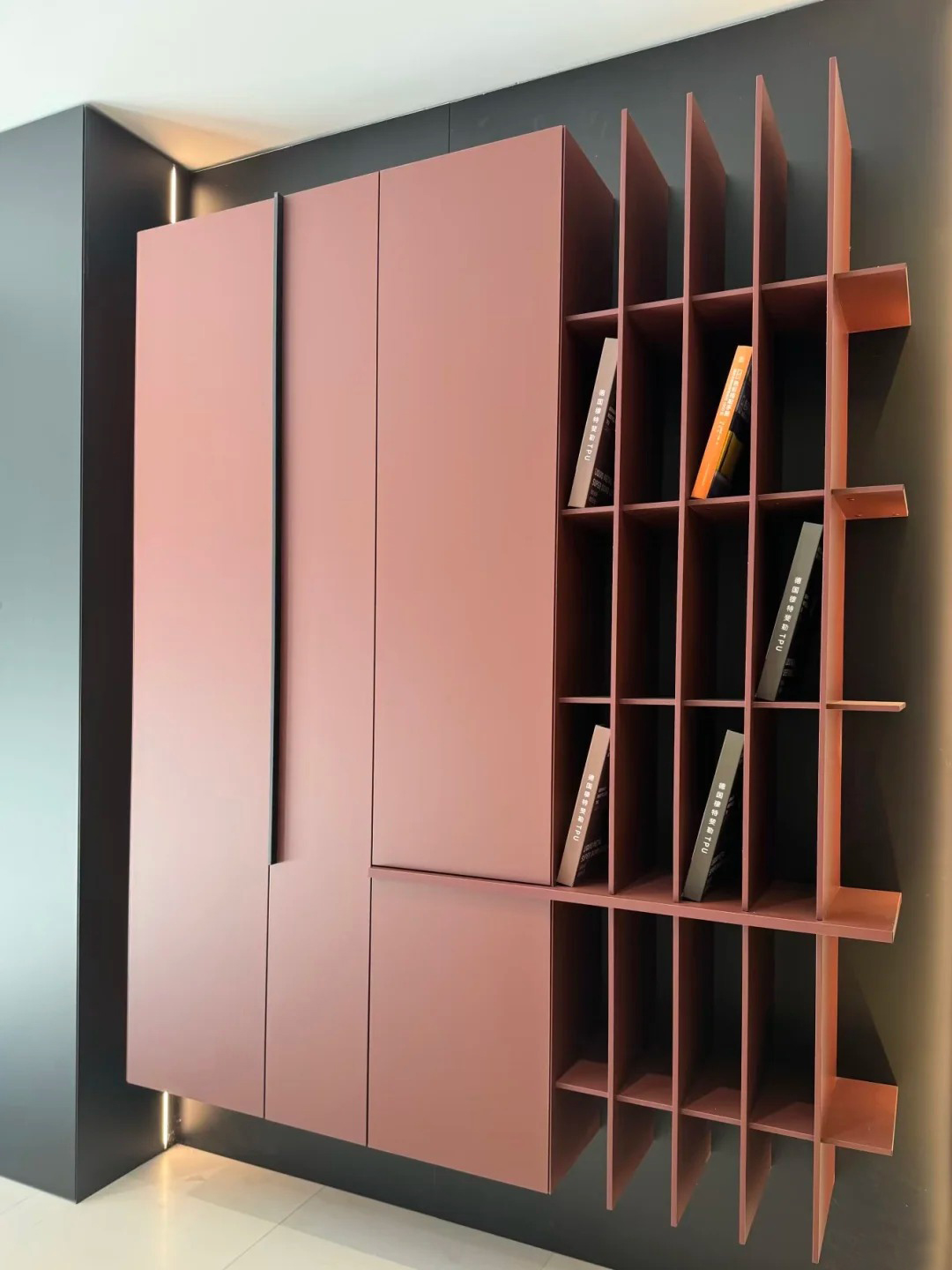
Two industries. One fibre.
Walk into any modern hospital ward, school corridor, or fitted-out hotel room and you are almost certainly surrounded by HPL. High pressure laminate is the hard, decorative surface material bonded to walls, furniture faces, door panels, and worktops. It is scratch-resistant, moisture-tolerant, and available in thousands of surface patterns.
Walk into a fabric mill and you find the other end of the same supply chain. Polyester staple fiber — the short, crimp-set filaments produced by cutting and texturising melt-spun polyester — feeds both the spinning frame that makes yarn and the carding-and-bonding lines that make nonwoven fabrics. It is those nonwoven fabrics that find their way into HPL manufacturing.
The connection is rarely discussed because the two industries speak different languages. But understanding it matters if you source or supply PSF, because HPL manufacturers represent a significant and growing demand segment — one that is less price-sensitive than commodity textile applications and more focused on consistent fibre quality.
HPL is manufactured by stacking multiple sheets of resin-saturated kraft paper, a printed décor sheet, and a transparent protective overlay, then pressing the whole assembly at roughly 150 °C under more than 7 MPa (about 1,000 psi) of pressure. The heat and pressure fuse the layers into a single, rigid, dimensionally stable panel. The result is the surface material sold under trade names like Formica, Trespa, and — from Xiamen — Golden Ricky HPL.
The structure of an HPL sheet
To understand where polyester enters, you need to understand what an HPL panel is made of — layer by layer.
Layer ⑤ is where polyester staple fiber enters the story. The backing nonwoven must withstand the pressing cycle — extreme heat, extreme pressure, prolonged duration — without deforming, melting, or delaminating. Standard polypropylene nonwovens cannot reliably handle 150 °C. Polyester, with a melt point above 250 °C, handles it comfortably. That thermal stability is the primary reason PSF-based nonwovens dominate HPL backing applications.
From staple fiber to nonwoven: the manufacturing pathway
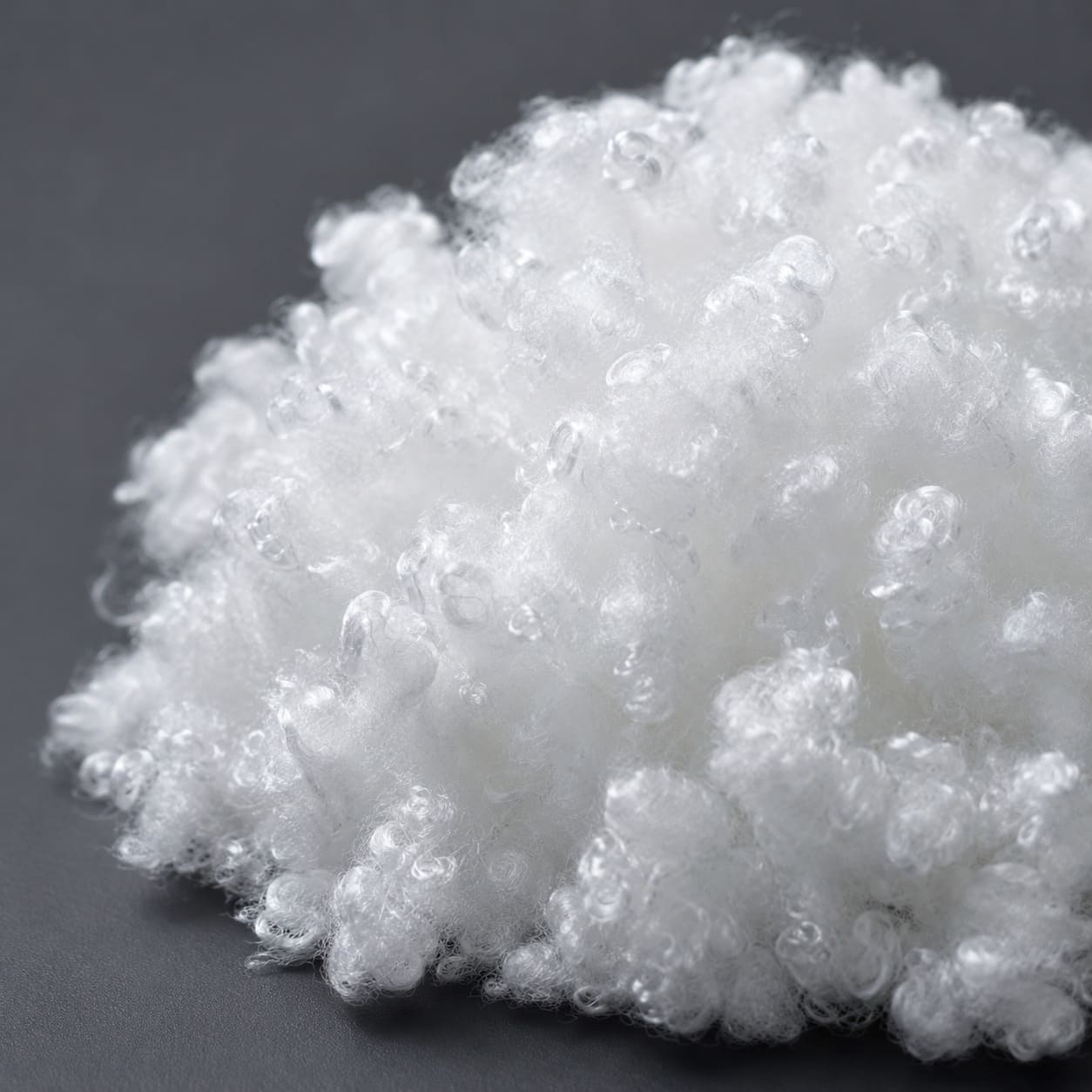
What makes a PSF suitable for HPL nonwoven?
Not all polyester staple fiber is interchangeable. The nonwoven producer — and, downstream, the HPL manufacturer — needs fiber that meets specific parameters:
- Denier: typically 1.5D to 4D for fine, uniform web formation
- Fibre length: 38–51 mm for carding-line compatibility
- Tenacity: minimum 5.0 cN/dtex to survive pressing
- Thermal stability: no shrinkage below 180 °C
- Crimp level: 9–12 crimps per cm for web cohesion before bonding
- Low oil content: to avoid contamination of the resin system
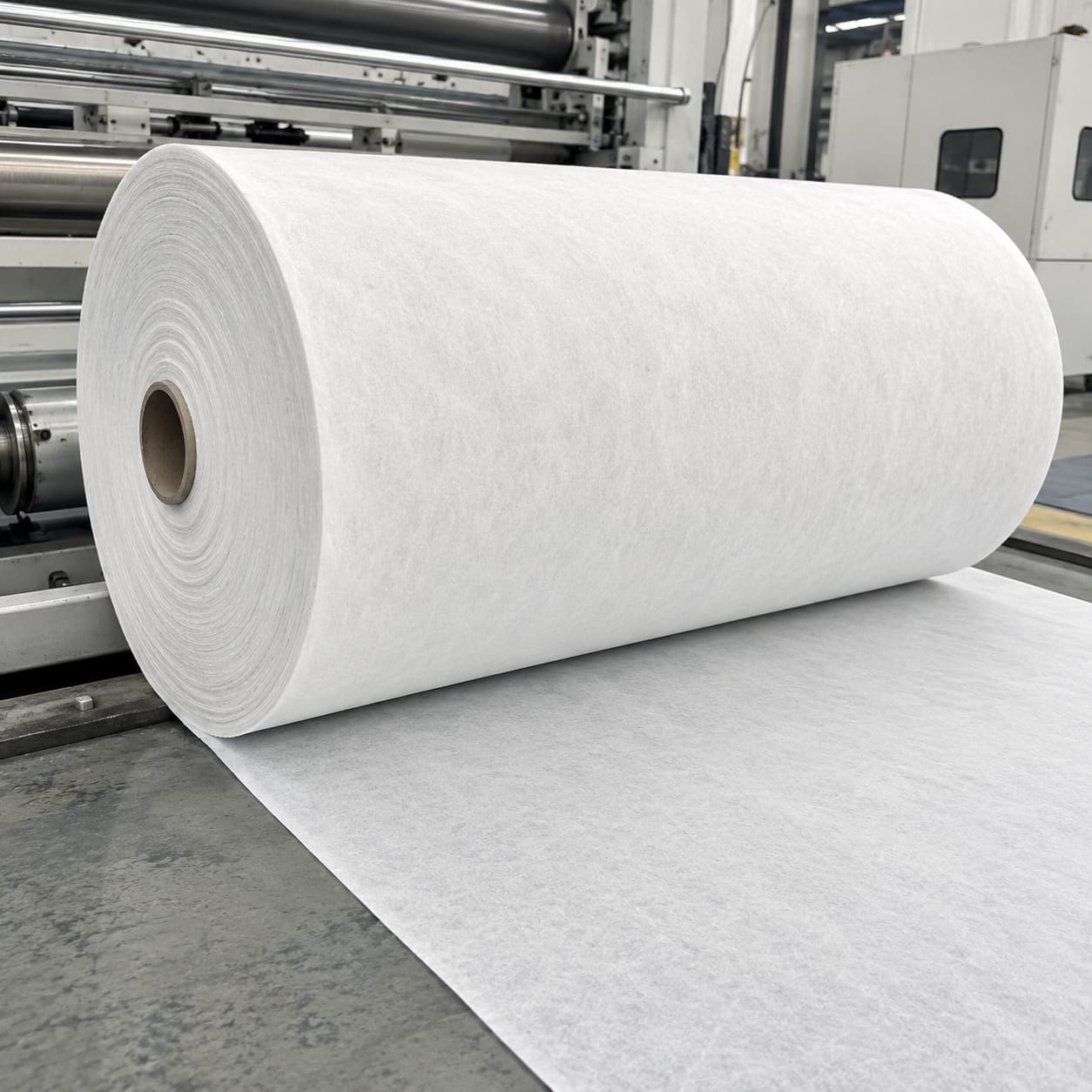
Why backing nonwoven quality matters to HPL performance
The HPL backing layer is not decorative — buyers never see it — but it directly controls three performance characteristics of the finished panel:
| Backing quality parameter | Effect on finished HPL | Consequence of failure |
|---|---|---|
| Basis weight uniformity | Even stress distribution across the panel | Panel warping, edge lifting after installation |
| Thermal stability | No deformation during pressing cycle | Layer delamination, surface blistering |
| Tensile strength | Panel rigidity and impact resistance | Cracking under load or during cutting |
| Resin absorption rate | Adhesion to phenolic core layers | Inter-layer voids, reduced bond strength |
| Surface smoothness | Clean, flat reverse face for substrate bonding | Difficulty bonding to MDF/plywood substrates |
Every one of these parameters traces back to the PSF used to produce the nonwoven. Inconsistent fibre denier leads to uneven web density and uneven basis weight. Insufficient crimp reduces web cohesion before thermal bonding. High oil content interferes with resin penetration. This is why experienced nonwoven producers for the HPL industry are particular about their PSF supplier — and why PSF producers who understand the end application can command a premium.
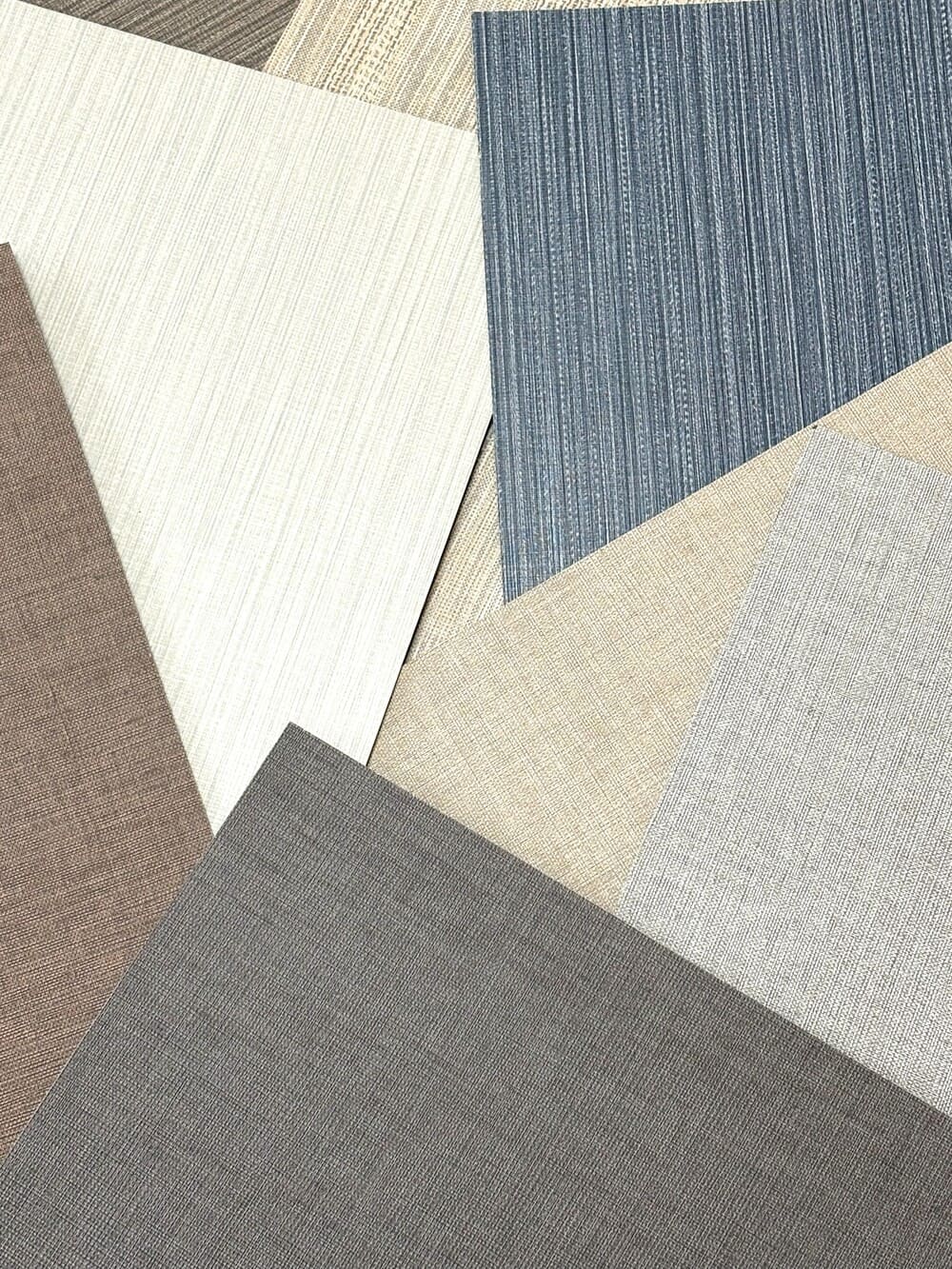
Spotlight: Golden Ricky HPL — a Xiamen manufacturer's perspective
It is a coincidence worth noting that two of Xiamen's chemical-material exporters operate in adjacent layers of this supply chain. Golden Ricky has manufactured high pressure laminate from their Xiamen facility since 1999, supplying decorative HPL, compact laminate, fire-rated boards, antibacterial panels, and specialist products including metal, magnetic, and postforming grades to buyers across more than 50 countries.
What Golden Ricky produces: Over 1,000 surface designs across standard decorative HPL, compact laminate (self-supporting, no substrate), fire-rated (A-grade non-combustible), antibacterial, traceless anti-fingerprint, metal-finish, and magnetic-writable grades. Factory-direct export from Xiamen with large stock inventory. If your project requires interior surface panels alongside your yarn or fibre procurement, Golden Ricky's full product range is here.
Yaakan supplies polyester staple fiber and polyester yarns; Golden Ricky supplies the HPL panels that may use PSF-derived nonwovens in their construction. The two businesses sit at different points on the same material chain — a reminder that chemical fiber, in its many forms, reaches further into everyday manufactured goods than most buyers realise.
Implications for PSF buyers and sellers
If you purchase polyester staple fiber for nonwoven production — or if you are a nonwoven fabric mill supplying HPL manufacturers — there are a few practical takeaways from understanding this supply chain:
- Specify thermal stability explicitly. Standard textile-grade PSF specifications rarely mention shrinkage at 160–180 °C. For HPL nonwoven applications, request test data at these temperatures before committing to a supplier.
- Oil content matters more than in textile applications. Textile finishes tolerate a degree of spin finish residue; phenolic resin systems used in HPL pressing do not. Low-oil or re-oiled PSF grades are preferable.
- Denier consistency is a quality differentiator. A coarse CV% in fibre denier translates directly to basis weight variation in the nonwoven, which the HPL press will reveal as differential density visible on the finished surface.
- The HPL segment rewards long-term relationships. HPL nonwoven producers run narrow quality tolerances, change suppliers infrequently, and tend to prefer manufacturers who can provide consistent lot-to-lot data — a profile that suits a dedicated polyester fiber exporter rather than a spot-market broker.
Yaakan Chemical Fiber supplies polyester staple fiber (PSF) in a range of deniers and fibre lengths suitable for both textile and nonwoven applications. All production is from our Xiamen base, with 18 years of export experience serving buyers in 50+ countries. Contact sales@yaakan.com to discuss PSF grades, volume pricing, and technical data sheets.
Summary
High pressure laminate is not a textile product — but it contains one. The backing layer of a standard HPL sheet is most commonly a polyester staple fiber nonwoven, chosen for its thermal stability under press conditions that would degrade most alternative materials. The quality of that nonwoven, and by extension the quality of the PSF from which it was made, has a measurable effect on the dimensional stability, bond strength, and overall performance of the finished panel.
Understanding where your fibre goes — beyond the spinning frame, beyond the fabric mill, into the surfaces of the buildings people inhabit — is part of what it means to work at the material level of manufacturing. Polyester, in this sense, is everywhere.
Enquire About Polyester Staple Fiber
18 years of export experience · Factory in Xiamen · 50+ countries served · Technical data sheets available